
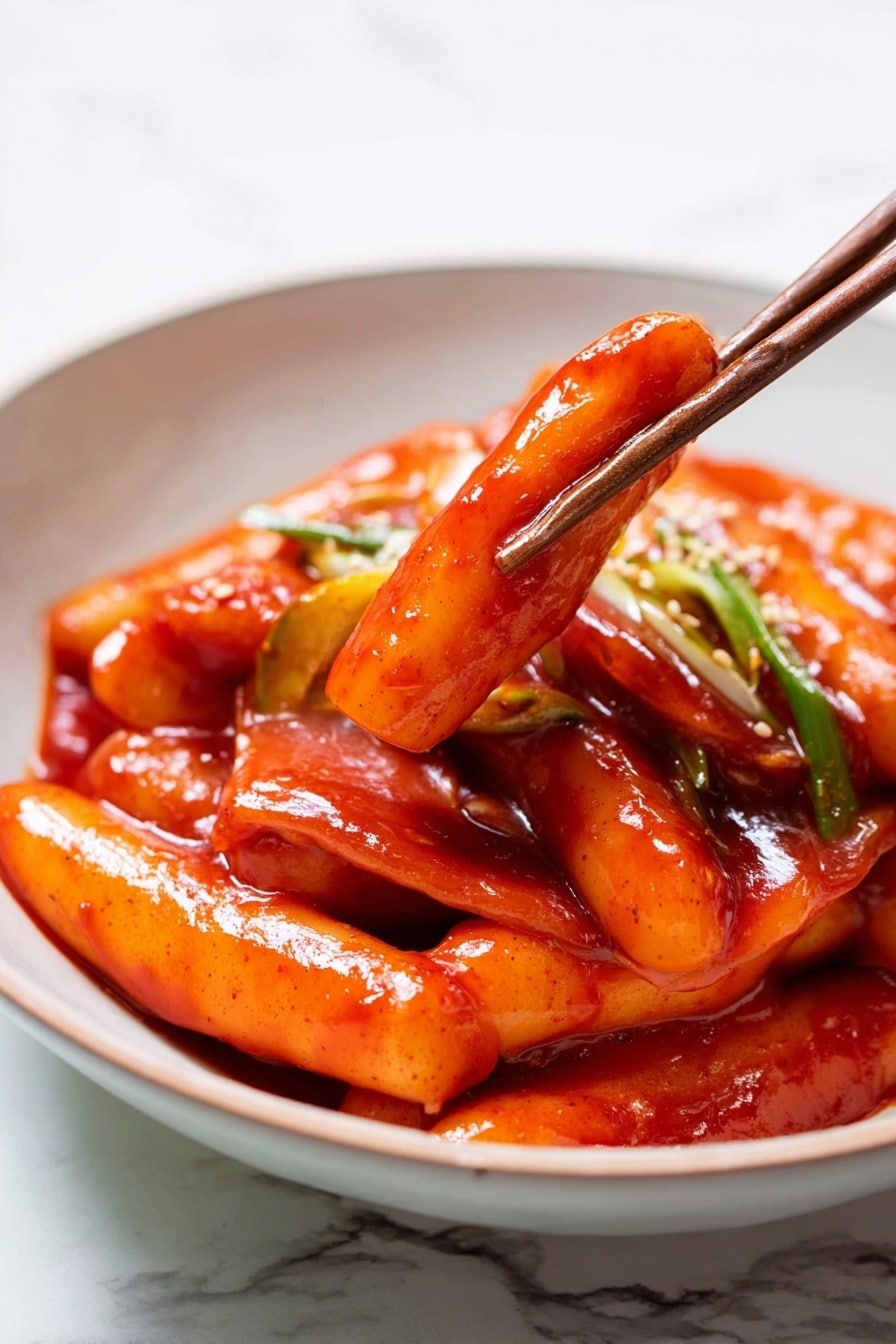
If you’re craving something fiery, chewy, and downright addictive, you’ve got to try this Spicy Tteokbokki Rice Cakes Recipe. I remember the first time I made it—I was instantly hooked by how those tender rice cakes soak up the luscious, spicy-sweet sauce. It’s a dish that’s not only incredibly comforting but also super fun to make at home, even if you’re not a Korean cooking pro. Stick with me here, and I’ll walk you through exactly how to nail this fan-freaking-tastic dish in your own kitchen.
Why You’ll Love This Recipe
- Perfectly Balanced Flavors: The sauce hits that addictive sweet, spicy, and savory trifecta that keeps you coming back for more.
- Chewy Goodness: The rice cakes get incredibly soft yet delightfully chewy, making every bite satisfyingly textured.
- Customizable Heat Level: You can dial up the spice or tone it down without losing any of the signature flavor.
- Great for Weeknight Cooking: Uses simple ingredients and comes together quickly for a comforting meal.

Ingredients You’ll Need
For the best Spicy Tteokbokki Rice Cakes Recipe, the ingredients work together like a well-choreographed dance. The chewy rice cakes, the spicy gochujang paste, and the anchovy broth form the foundation. Here’s what you’ll want to keep on hand, and some tips to make your shopping a breeze.
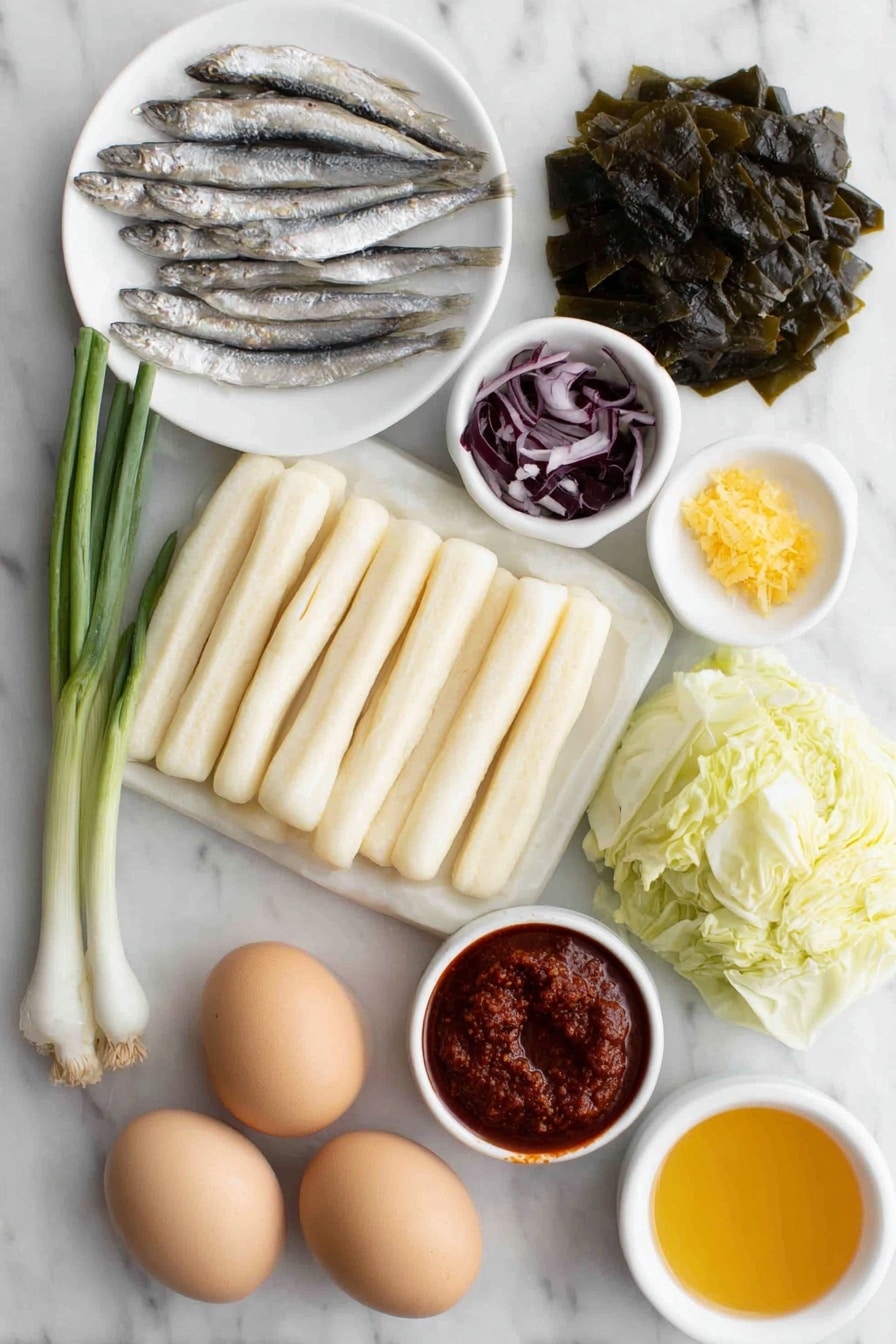
- Tteokbokki rice cakes: Fresh if you can find them—they soften perfectly and avoid that overly rubbery texture from frozen varieties.
- Fish cakes (Eomuk): Adds a wonderful umami layer; cut them into manageable pieces for easy eating.
- Green cabbage: I like the slight crunch and sweetness it brings to balance the spicy sauce.
- Scallions: They give a subtle oniony punch and freshness when stirred in last minute.
- Minced garlic: Essential for that depth of flavor that really rounds out the sauce.
- Dried anchovies and kelp (Dasima): The magic behind the anchovy broth, creating a rich but not overpowering base.
- Gochujang (Korean red chili paste): This is the heart of the spice, sweet, and heat combo—use good quality for best results.
- Gochugaru (Korean chili flakes): Fine grind works best here; it layers in heat without being harsh.
- Soy sauce: For that salty umami touch.
- Sugar and corn syrup: The sweeteners balance the heat perfectly; you can adjust to taste.
- Optional boiled eggs: My family goes crazy for these nestled into the saucy goodness.
Variations
I love playing around with this Spicy Tteokbokki Rice Cakes Recipe depending on what I have in my fridge or how spicy I’m feeling that day. It’s a forgiving recipe that rewards your creativity, so don’t hesitate to swap ingredients to your liking.
- Add seafood: Toss in some shrimp or mussels for a seafood twist that tastes incredible paired with the spicy sauce.
- Make it vegetarian: Skip anchovies and make a kombu (kelp) broth instead; add mushrooms for umami.
- Extra veggies: Try carrots or zucchini sliced thinly to add a little color and sweetness.
- Adjust the heat: If you want it really fiery, double the gochugaru; for mild, cut back and add a bit more sugar.
How to Make Spicy Tteokbokki Rice Cakes Recipe
Step 1: Prepare the ingredients with love
Start by soaking your rice cakes in cold water for about 20 minutes. This step is crucial because it softens them up, especially if they’ve been refrigerated or frozen. Meanwhile, cut your fish cakes, cabbage, and scallions into roughly 2-inch long pieces—think bite-sized but substantial enough to enjoy their texture. Mince your garlic finely, so it blends seamlessly into that spicy sauce.
Step 2: Build a flavorful broth base
In a large pan, place your dried anchovies, kelp, and onion then pour in 5 cups of water. Bring this to a gentle boil over medium-high heat and let it simmer for about 10 minutes. This is where all that rich umami flavor develops, so don’t rush it. After simmering, be sure to remove the anchovies, kelp, and onion to keep your broth clear and ready for the sauce.
Step 3: Mix in the spicy sauce
Next, add the gochujang, gochugaru, soy sauce, sugar, and corn syrup right into that fragrant broth. Stir until the gochujang dissolves fully into the liquid—it can be a bit thick, so keep that spoon moving to avoid clumps. This sauce mixture is where that balance of heat, sweetness, and savoriness shines brightest.
Step 4: Cook the rice cakes to chewy perfection
Drop your soaked rice cakes in the sauce and let them bubble away for about 8 to 10 minutes. You’ll want to stir frequently—trust me, rice cakes love to stick to the bottom if left unattended. The goal is a thickened, luscious sauce and super soft yet chewy rice cakes. If your rice cakes seem stubborn, a few extra minutes won’t hurt.
Step 5: Toss in veggies, fish cakes, and final touches
Add your chopped cabbage, fish cakes, and minced garlic, then keep the heat on medium. Cook for another 4 to 6 minutes, stirring occasionally. The rice cakes and veggies get time to soak up all that spicy goodness. Finally, throw in scallions and optional boiled eggs 2-3 minutes before you’re ready to serve. Give it a taste and tweak as needed—maybe a pinch more sugar or soy sauce to get your perfect balance.
Pro Tips for Making Spicy Tteokbokki Rice Cakes Recipe
- Soak the Rice Cakes: I learned soaking them makes all the difference for a soft yet chewy texture—don’t skip this step!
- Fine Grind Gochugaru: Using finely ground red chili flakes keeps the sauce smooth and well balanced.
- Keep Stirring: Rice cakes stick easily, so constant stirring during cooking prevents scorching and clumps.
- Adjust Sauce Consistency: If the sauce thickens too much too quickly, splash in extra broth or water to keep things saucy and delicious.
How to Serve Spicy Tteokbokki Rice Cakes Recipe
Garnishes
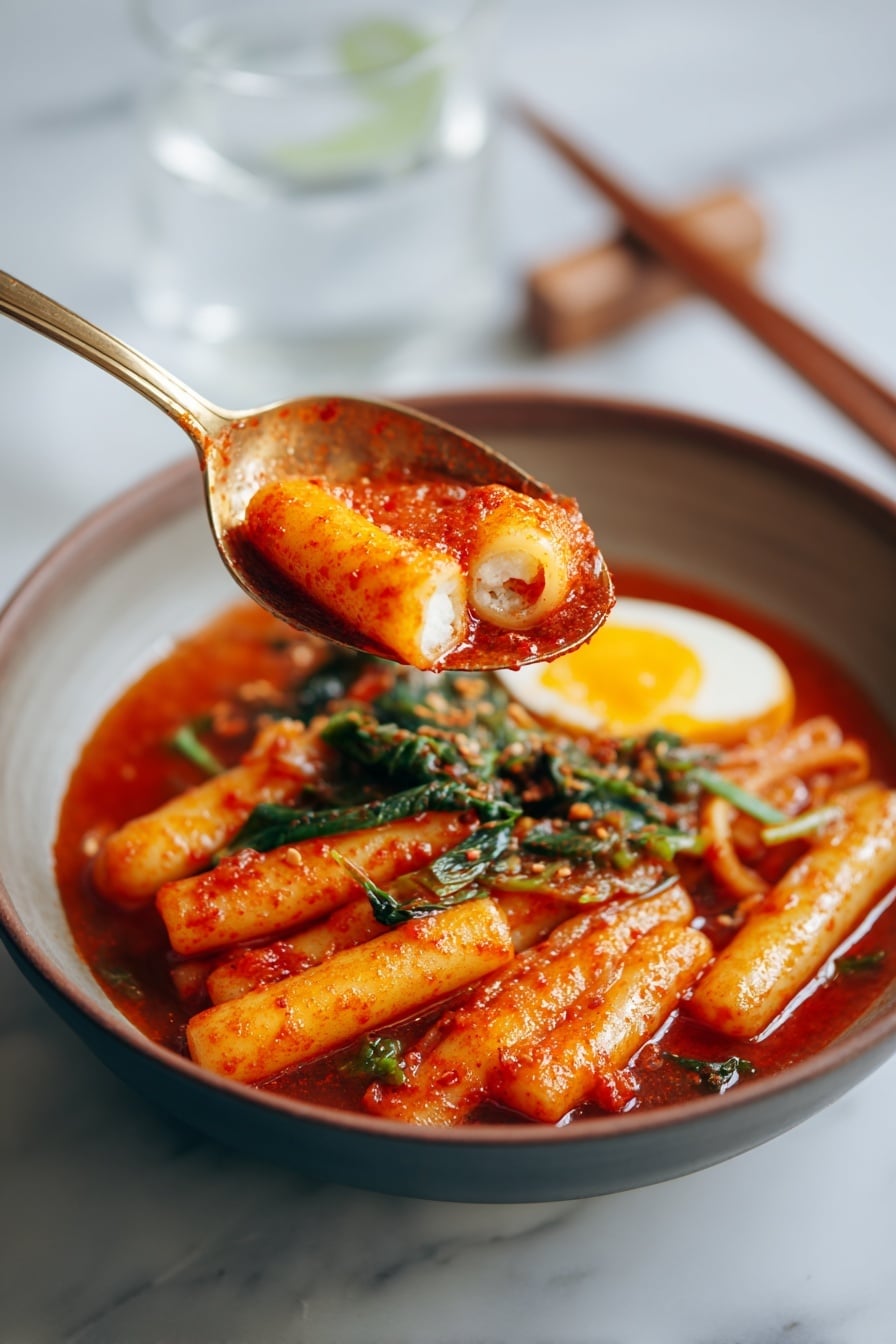
I love sprinkling toasted sesame seeds and a pinch of chopped scallions right on top—it adds a nice nutty crunch and freshness that contrasts beautifully with the rich umami sauce. For an extra touch, sometimes I drizzle a little bit of sesame oil or toss in some thin strips of roasted seaweed (gim) for a true Korean street-food vibe.
Side Dishes
Spicy Tteokbokki pairs wonderfully with simple sides like kimchi for tangy brightness or a cool cucumber salad to refresh your palate. Whenever I make this at home, I love having some light japchae (stir-fried glass noodles) or steamed rice on hand, just in case the spice level sneaks up on guests.
Creative Ways to Present
For special occasions, I like to serve tteokbokki in individual ceramic bowls, topped with a soft-boiled egg cut in half and a sprinkle of microgreens for color contrast. Another fun idea is to plate it with mini skewers of fish cake and rice cakes on the side for a party appetizer twist that guests adore.
Make Ahead and Storage
Storing Leftovers
Leftover tteokbokki tastes great the next day, though the rice cakes tend to firm up a bit. I store mine in an airtight container in the fridge with a bit of leftover broth to keep them from drying out.
Freezing
Freezing isn’t my first choice because the texture changes, but if you do freeze the cooked dish, thaw it overnight in the fridge and reheat gently to avoid rubbery rice cakes. It works in a pinch!
Reheating
I never recommend the microwave for reheating tteokbokki—it can make the rice cakes tough. Instead, reheat gently on the stovetop over low heat with a splash of water or broth to revive the sauce’s sauciness and keep the rice cakes tender and chewy.
FAQs
-
Can I use frozen rice cakes for Spicy Tteokbokki Rice Cakes Recipe?
Absolutely! Frozen rice cakes are quite common and work fine—just be sure to soak them longer, maybe 30 minutes or more, to help them soften before cooking. Fresh is ideal but frozen is a great alternative.
-
How spicy is this recipe, and can I make it milder?
This recipe has a moderate heat that Korean food lovers appreciate. If you prefer it milder, reduce the gochugaru and maybe add a little extra sugar or corn syrup to balance the flavors without losing the signature taste.
-
What can I substitute for anchovy broth if I can’t find anchovies?
If anchovies aren’t available or you want a vegetarian option, you can use kombu (dried kelp) broth alone or a mild vegetable broth. The flavor won’t be quite the same, but it still results in tasty tteokbokki.
-
Can I make Spicy Tteokbokki Rice Cakes Recipe ahead of time for a party?
Yes! You can prepare most components in advance, but I recommend finishing cooking the rice cakes shortly before serving to keep their ideal chewy texture. Keep sauce and broth separate until the last minute if possible.
Final Thoughts
I absolutely love how this Spicy Tteokbokki Rice Cakes Recipe brings a slice of Korean street food right into my kitchen—and later, onto my family’s plates. It’s one of those dishes that feels special yet is easy enough to whip up when you want a cozy meal with a kick. When you make it yourself, you’ll discover how flexible it is, and how satisfying it is to taste that perfectly chewy rice cake drenched in spicy-sweet sauce you helped create. So go ahead, gather your ingredients, and enjoy the fun of cooking (and eating!) tteokbokki just like I do.
Print
Spicy Tteokbokki Rice Cakes Recipe
- Prep Time: 20 minutes
- Cook Time: 20 minutes
- Total Time: 40 minutes
- Yield: 3 servings 1x
- Category: Main Dish
- Method: Stovetop
- Cuisine: Korean
Description
Tteokbokki is a popular Korean street food featuring chewy rice cakes stir-fried in a spicy, slightly sweet gochujang-based sauce. This recipe uses anchovy broth for depth and includes fish cake, cabbage, and scallions to balance textures and flavors. Perfectly chewy and richly flavored, this classic dish is a comforting and spicy treat that’s easy to prepare at home.
Ingredients
Main Ingredients
- 1 pound tteokbokki tteok 떡볶이 떡 (about 24 3-inch long rice cake pieces)
- 1–2 eomuk 어묵 (fish cake) sheets
- 4 ounces green cabbage (yangbaechu, 양배추)
- 1–2 scallions
- 1 tablespoon minced garlic
Anchovy Broth
- 8–10 medium to large dried anchovies (마른멸치), about 0.5 ounces (15 grams)
- 1 piece dasima (dried kelp), about 3-inch square
- 1/4 medium onion, roughly sliced
- 5 cups water (for making broth)
Tteokbokki Sauce
- 3 cups anchovy broth or water (use 4 cups for more sauce)
- 3 tablespoons gochujang, 고추장
- 1–3 teaspoons finely ground gochugaru, 고추가루
- 1 tablespoon soy sauce
- 2 tablespoons sugar (use 1 tablespoon for less sweet)
- 1 tablespoon corn syrup (or oligo syrup; increase sugar if omitted)
Optional
- 2 boiled eggs
Instructions
- Soak Rice Cakes: Soak the tteokbokki rice cakes in water for about 20 minutes to soften them. This time can be extended if using refrigerated rice cakes.
- Prepare Ingredients: Cut the fish cake, cabbage, and scallions into approximately 2-inch long pieces to ensure even cooking and ease of eating.
- Make Anchovy Broth: In a large pan, combine dried anchovies, dasima, and sliced onion with 5 cups of water. Bring to a boil over medium-high heat and maintain boiling for 10 minutes to extract flavors. Reduce heat if necessary to avoid excessive boiling. Remove anchovies, kelp, and onion from broth to keep it clear.
- Add Sauce Ingredients: Add the gochujang, gochugaru, soy sauce, sugar, and corn syrup to the broth in the pan. Stir thoroughly to dissolve the gochujang evenly, creating a smooth, spicy sauce base.
- Cook Rice Cakes: Add soaked rice cakes to the pan. Boil until the rice cakes become very soft and the sauce thickens, approximately 8 to 10 minutes. Stir frequently to prevent sticking and ensure even cooking. This time may vary depending on the rice cakes’ freshness.
- Add Vegetables and Fish Cake: Add the cut cabbage, minced garlic, and fish cakes to the pan. Continue to boil and stir occasionally for an additional 4 to 6 minutes until the vegetables are tender and the rice cakes reach desired softness. Add more broth or water if the sauce reduces too much.
- Finish and Serve: Drop in the scallions and optional boiled eggs with 2 to 3 minutes remaining. Taste the sauce and adjust seasoning as needed. Serve hot immediately for the best flavor and texture.
Notes
- Tteokbokki rice cakes can be found fresh, refrigerated, or frozen at Korean markets. Use fresh locally made rice cakes if available for best texture; otherwise, refrigerated or frozen can be used.
- For a variation on the sauce, try 2 tablespoons gochujang, 2 tablespoons finely ground gochugaru, and 1.5 tablespoons soy sauce. This creates a cleaner-tasting and spicier sauce.
- Finely ground gochugaru works best in this recipe. Grind regular gochugaru in a spice grinder or sieve for optimal texture.
- Tteokbokki does not reheat well in the microwave. Warm any leftovers in a small pan with a little broth or water over low heat to restore texture and flavor.
Nutrition
- Serving Size: 1 cup (approximate)
- Calories: 320 kcal
- Sugar: 12 g
- Sodium: 780 mg
- Fat: 4 g
- Saturated Fat: 0.5 g
- Unsaturated Fat: 3 g
- Trans Fat: 0 g
- Carbohydrates: 65 g
- Fiber: 2 g
- Protein: 6 g
- Cholesterol: 15 mg


Your email address will not be published. Required fields are marked *