
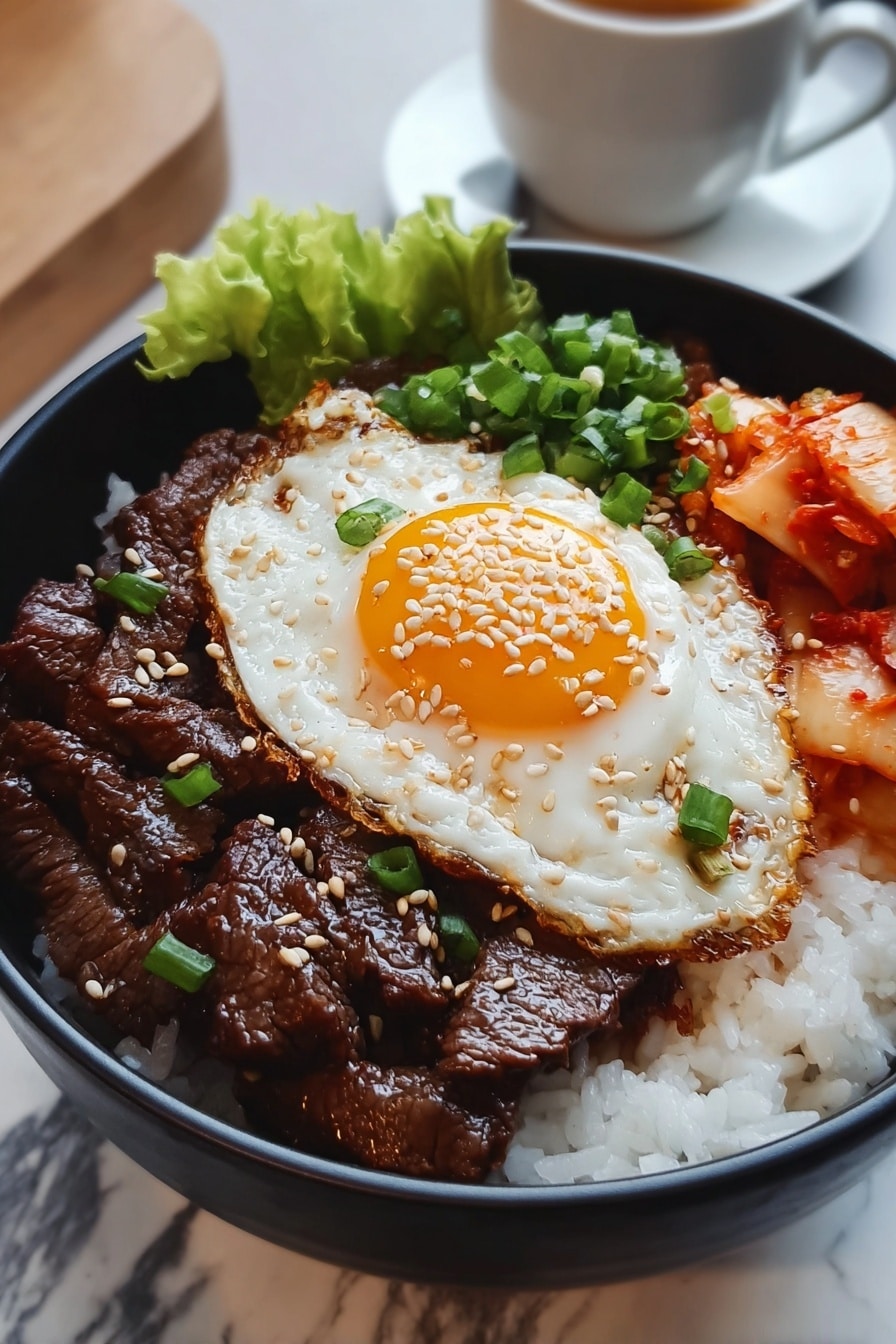
If you’ve ever craved that perfect balance of sweet, savory, and tender meat, you’re going to want to stick around for this one. My Korean Beef Bulgogi Recipe is one of those dishes that’s just downright irresistible and surprisingly easy to pull off at home. Whether you’re new to Korean cooking or a seasoned fan, this recipe delivers that authentic bulgogi flavor with a little personal twist I think you’ll love. Trust me, once you try it, your family will be asking for it on repeat!
Why You’ll Love This Recipe
- Tender, Juicy Beef: Marinating the thinly sliced steak overnight means melt-in-your-mouth deliciousness every time.
- Perfect Balance of Flavors: Sweet, savory, and a hint of spice come together beautifully in the marinade.
- Simple Yet Impressive: You won’t believe how easy it is to make a restaurant-quality dish right in your kitchen.
- Versatile Serving Options: Eat it over rice, wrapped in lettuce, or as a tasty addition to bibimbap bowls.

Ingredients You’ll Need
The magic of bulgogi really starts with fresh, quality ingredients that work harmoniously. A good cut of beef is crucial—the marinade then adds layers that’ll make your taste buds dance. When shopping, I always look for ribeye or sirloin that’s nicely marbled for extra tenderness.

- Ribeye or sirloin steak: Ribeye is my favorite for tenderness, but sirloin is great if you want it a bit leaner.
- Soy sauce: Use a naturally brewed soy sauce for the deepest umami flavor.
- Brown sugar: Adds sweetness and helps with that caramelized finish.
- Sesame oil: Just a little gives the marinade a toasty note that’s signature to Korean cooking.
- Garlic: Freshly minced garlic packs pungency and aroma you can’t skip.
- Fresh ginger: Grated ginger brings warmth and a slight zing that balances the flavors.
- Asian pear or red apple: This is the secret tenderizer—grating fruit breaks down meat fibers beautifully.
- Mirin (optional): Adds a hint of sweetness and complexity, but you can skip if you don’t have it.
- Gochujang (optional): This fermented chili paste kicks up the spice level, but leave it out if you want it milder.
- Black pepper: Freshly ground to add subtle heat.
- Green onions: Chopped finely to infuse the marinade with freshness.
- Toasted sesame seeds: For nuttiness and a bit of texture.
- Neutral oil (for cooking): I use avocado or canola for high-heat searing.
- Vegetables (onion, carrot, mushrooms): Adds color, crunch, and an earthy balance to the meat.
- Honey butter: One of my favorite twists—it caramelizes the beef with a silky glaze that’s just dreamy.
- Cooked rice & lettuce/perilla leaves: Essential for serving and that authentic Korean wrap experience.
Variations
I love that Korean Beef Bulgogi Recipe is so easy to tweak depending on your mood or dietary needs. Over time, I’ve discovered some fun ways to customize it so you can make it truly yours.
- Vegetarian Swap: I’ve successfully used thinly sliced king oyster mushrooms instead of beef for a meaty texture with the same marinade.
- Spice Level: If I want it hotter, I add extra gochujang or some Korean chili flakes; for milder, I skip the gochujang altogether.
- Slow Cooker Version: If you want to prep ahead and have tender beef ready after work, set your beef and marinade in a slow cooker on low for 4 hours. The texture changes slightly but still delicious!
- Wrap It Up Differently: Besides lettuce, I’ve wrapped bulgogi in rice paper for a fresh spring roll twist that’s perfect for summer.
How to Make Korean Beef Bulgogi Recipe
Step 1: Prepare the Beef for Perfect Slices
This is one trick I discovered that makes slicing so much easier—you’ll want to put your beef in the freezer for about 30 minutes before cutting. It firms up the meat without freezing it solid, so your slices come out super thin and smooth, which is key for that authentic bulgogi texture. Use a sharp knife and always slice against the grain to keep the meat tender when cooked.
Step 2: Whisk Together the Flavor-Packed Marinade
In a large bowl, mix soy sauce, brown sugar, sesame oil, minced garlic, grated ginger, and grated Asian pear (or red apple). This fruit isn’t just sweetness—it’s a natural tenderizer. If you like, stir in mirin for extra depth and gochujang if you want a little kick. Don’t forget to add chopped green onions and toasted sesame seeds for that nutty aroma. Give it a good whisk to combine everything evenly.
Step 3: Marinate the Beef – Patience Pays Off
Now, toss your thinly sliced beef into the marinade, making sure every strip is well coated. I used to rush this part, but here’s what I learned: the longer you marinate, the more flavorful and tender your beef will be. At least one hour works in a pinch, but I swear by overnight marination when I plan ahead. Just cover the bowl and pop it in the fridge.
Step 4: Prep Some Fresh Veggies
While your beef is soaking up all those incredible flavors, slice a small onion, julienne a carrot, and slice mushrooms (shiitake or white button both work great). These will add freshness and texture when sautéed along with the beef later on.
Step 5: Sear the Beef to Caramelized Perfection
Heat a grill pan or cast iron skillet over medium-high heat and add a tablespoon of neutral oil. It’s important not to overcrowd the pan — cook the beef in batches so the edges caramelize instead of steam. Each batch will take about 2–3 minutes per side. Just before it’s done, drizzle on some honey butter and toss quickly to create that gorgeous glossy glaze. This trick seriously elevated my bulgogi game — the honey butter adds a rich sweetness that perfectly contrasts the salty soy sauce.
Step 6: Quickly Sauté the Vegetables
In the same pan, add your sliced onions, carrots, and mushrooms. Sauté for 3–4 minutes until just softened but still vibrant. This step adds color and balances the rich meat with some earthiness and crunch.
Step 7: Time to Serve!
Plate your juicy caramelized beef alongside the sautéed veggies. Sprinkle extra toasted sesame seeds and sliced green onions on top for that finishing touch. Serve it steaming hot over bowls of fluffy cooked rice, and don’t forget the lettuce or perilla leaves for wrapping. Adding some spicy kimchi on the side takes the entire meal up a notch and truly rounds out the experience.
Pro Tips for Making Korean Beef Bulgogi Recipe
- Freezing Beef for Easier Slicing: Putting your meat in the freezer for 30 minutes firms it up, helping you get those needle-thin slices important for bulgogi’s texture.
- Marinate Overnight for Best Flavor: I found letting the beef soak overnight gives you maximum tenderness and a richer marinade penetration.
- Don’t Crowd the Pan: Overcrowding steams the meat rather than caramelizing it, so cook in small batches for that perfect sear.
- Use Honey Butter for Glaze: Adding the honey butter at the end creates a shiny, sweet finish that takes your bulgogi from good to unforgettable.
How to Serve Korean Beef Bulgogi Recipe

Garnishes
On my table, you’ll always find extra toasted sesame seeds and freshly sliced green onions scattered over the finished dish. I love how the green onions add a bright pop of color and mild sharpness that cuts through the richness of the beef. Sometimes I’ll sprinkle a pinch of toasted seaweed flakes too, just to add a bit of that ocean umami.
Side Dishes
Aside from steamed white rice, I enjoy serving bulgogi with traditional Korean sides like kimchi, pickled radish, or a simple cucumber salad for freshness. Occasionally, I make a quick Korean-style spinach salad (sigeumchi namul) to add a healthy green touch that balances the meal.
Creative Ways to Present
For special dinners, I like laying out individual lettuce wraps on a platter with bowls of ssamjang (spicy dipping sauce), grilled peppers, and rice so everyone can build their own wraps. Another fun idea: use bulgogi as a topping for a bibimbap bowl, piling veggies, gochujang sauce, and a fried egg over rice – always a crowd-pleaser!
Make Ahead and Storage
Storing Leftovers
When I have leftovers, I store the cooked beef and veggies separately in airtight containers in the fridge. This keeps everything fresher and prevents the vegetables from getting soggy. Leftovers usually stay great for up to three days.
Freezing
I’ve frozen marinated, uncooked beef ahead of time when prepping for busy weeks. Simply portion it out into freezer bags and thaw in the fridge overnight before cooking. I don’t recommend freezing the fully cooked bulgogi because the texture can suffer a bit upon reheating.
Reheating
To warm up leftovers, I gently reheat the beef in a skillet over medium heat, adding a splash of water or sesame oil to keep it from drying out. This helps maintain the tenderness and caramelized flavor better than microwaving.
FAQs
-
Can I use other types of meat for Korean Beef Bulgogi Recipe?
Absolutely! While ribeye and sirloin are traditional, you can also use flank steak or skirt steak if you slice them thinly against the grain. Some people even enjoy chicken bulgogi or pork variations by adjusting the marinade slightly.
-
Is gochujang necessary in the marinade?
Not at all. Gochujang adds a nice spicy kick and depth, but it’s optional. If you prefer milder flavors or don’t have it on hand, simply leave it out—you’ll still get classic bulgogi flavors from the rest of the marinade ingredients.
-
Why do you use Asian pear or apple in the marinade?
Grated Asian pear or apple acts as a natural tenderizer and adds subtle sweetness to the beef. The enzymes in the fruit help break down proteins in the meat, making it extra tender and juicy once cooked.
-
Can I prepare Korean Beef Bulgogi Recipe ahead of time?
Yes! Marinating the beef ahead, even overnight, is ideal since it maximizes flavor. You can also pre-slice vegetables or make the honey butter ahead to save time on cooking day.
Final Thoughts
This Korean Beef Bulgogi Recipe has become one of my absolute favorites because it’s not only delicious but also a fantastic way to gather friends or family around the table for an interactive meal. I love how versatile it is, plus that honey butter glaze is a personal signature you don’t want to miss. I really encourage you to give this a try—even if you’re short on experience, the steps are straightforward. Once you do, I’m pretty sure this recipe will hold a special spot in your dinner rotation, just like it did in mine!
Print
Korean Beef Bulgogi Recipe
- Prep Time: 15 minutes
- Cook Time: 10 minutes
- Total Time: 1 hour 25 minutes
- Yield: 4 servings 1x
- Category: Main Course
- Method: Stovetop
- Cuisine: Korean
Description
This Korean Beef Bulgogi recipe offers a savory and slightly sweet marinated beef dish, featuring tender thinly sliced ribeye or sirloin steak cooked to caramelized perfection. Enhanced with a unique honey butter glaze and served alongside sautéed vegetables, it showcases the classic flavors of Korean cuisine with an easy-to-follow stir-fry method, perfect for a flavorful weeknight dinner or special occasion.
Ingredients
For the Beef:
- 1.5 lbs ribeye or sirloin steak, thinly sliced against the grain
For the Marinade:
- 6 tbsp soy sauce
- 3 tbsp brown sugar
- 2 tbsp sesame oil
- 4 cloves garlic, minced
- 1 tbsp fresh ginger, grated
- 1/2 Asian pear or red apple, grated
- 2 tbsp mirin (optional)
- 1 tbsp gochujang (optional, for spice)
- 1/4 tsp black pepper
- 2 tbsp finely chopped green onions
- 1 tsp toasted sesame seeds
For Cooking & Serving:
- 1 tbsp neutral oil (for cooking)
- 1 small onion, thinly sliced
- 1 carrot, julienned
- 1 cup mushrooms (shiitake or white button), sliced
- 2 tbsp honey butter (1 tbsp melted butter + 1 tbsp honey, mixed)
- Cooked rice, for serving
- Lettuce leaves or perilla leaves, for wrapping
- Extra sesame seeds and sliced green onions, for garnish
Instructions
- Prepare the Beef: Place the beef in the freezer for 30 minutes to firm up, making it easier to slice. Use a sharp knife to cut it into thin strips against the grain, which helps ensure tenderness.
- Make the Marinade: In a large bowl, whisk together soy sauce, brown sugar, sesame oil, minced garlic, grated ginger, grated pear or apple, mirin (if using), gochujang (if using), and black pepper. Stir in the chopped green onions and toasted sesame seeds to build flavor and texture.
- Marinate the Beef: Add the sliced beef to the marinade, making sure every piece is evenly coated. Cover with plastic wrap and refrigerate for at least 1 hour, or preferably overnight for maximum flavor and tenderness.
- Prepare Vegetables: While the beef marinates, thinly slice the onion, julienne the carrot, and slice the mushrooms to have all your vegetables ready for cooking.
- Cook the Bulgogi: Heat a grill pan or cast iron skillet over medium-high heat and add 1 tablespoon of neutral oil. Add the marinated beef in batches to avoid overcrowding the pan. Cook each batch for 2–3 minutes per side until the beef is caramelized and cooked through. Just before removing from the pan, drizzle with the honey butter and toss quickly to coat and develop a beautiful glaze.
- Sauté the Vegetables: In the same pan, add the sliced onion, carrot, and mushrooms. Sauté for 3–4 minutes until the vegetables are softened but still vibrant.
- Serve: Arrange the cooked beef and sautéed vegetables on a plate. Garnish with extra sesame seeds and green onions. Serve with steamed rice or use lettuce/perilla leaves to wrap the beef and vegetables, optionally accompanied by kimchi for a traditional touch.
Notes
- Why the honey butter? It adds an extra depth of caramelization and a beautiful glaze that balances the saltiness of the soy sauce.
- Meat selection: Ribeye is the most tender choice, though sirloin is a leaner alternative.
- Marination tip: Marinate overnight whenever possible to enhance flavor and tenderness.
- Spice level: Gochujang adds heat but is optional depending on your preference.
- Cooking method: Using a grill pan provides caramelization, but grilling over high heat is an alternative for a smoky flavor.
Nutrition
- Serving Size: 1 serving (approximately 1 cup cooked beef with vegetables and rice)
- Calories: 450 kcal
- Sugar: 12 g
- Sodium: 850 mg
- Fat: 20 g
- Saturated Fat: 7 g
- Unsaturated Fat: 11 g
- Trans Fat: 0 g
- Carbohydrates: 38 g
- Fiber: 3 g
- Protein: 32 g
- Cholesterol: 75 mg


Your email address will not be published. Required fields are marked *