
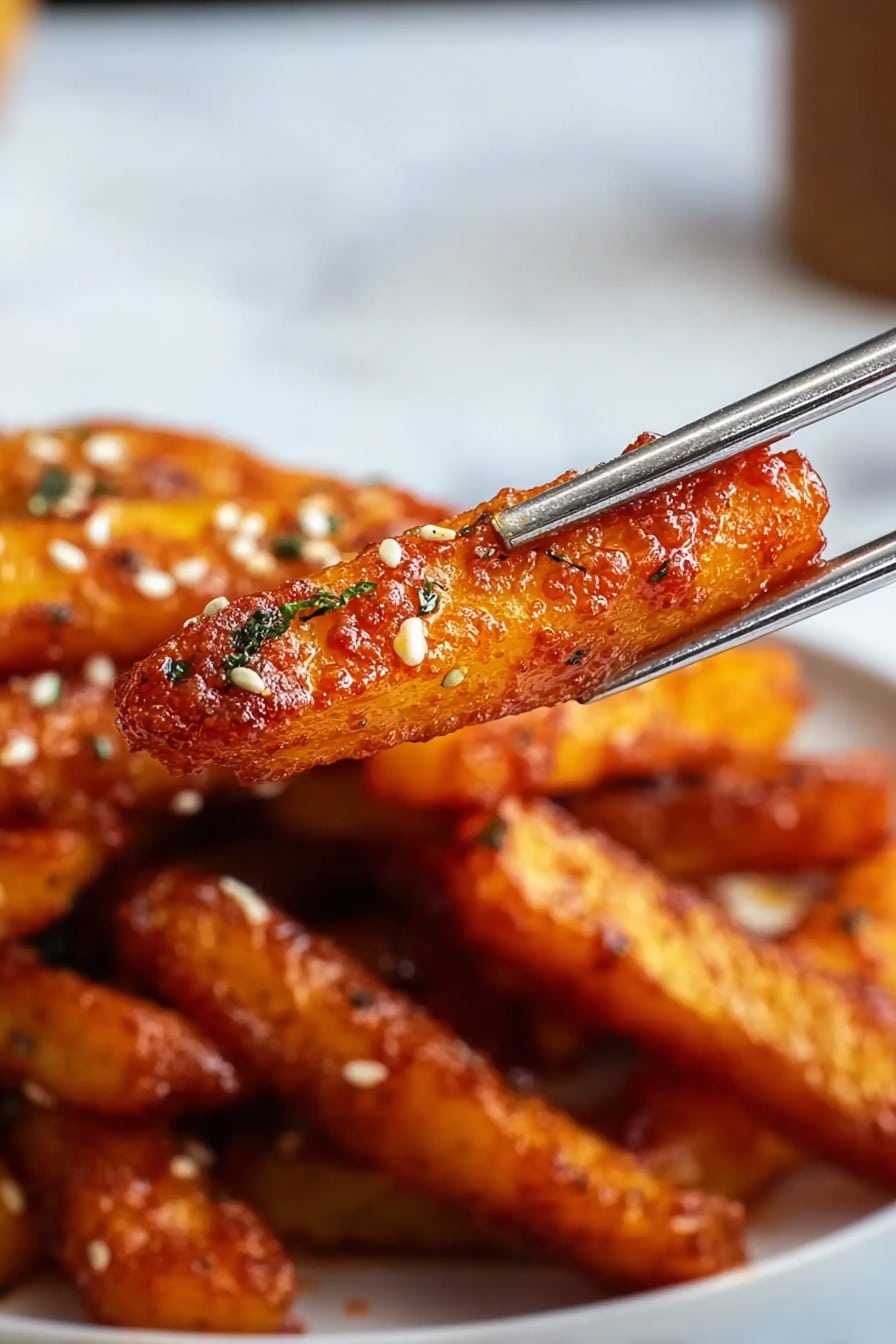
If you’re craving something with a bit of chew, a touch of spice, and that irresistible crunchy edge, you’ve gotta try this Crispy Korean Ddeokbokki Recipe. I absolutely love how this version takes the classic soft rice cakes and transforms them by pan-frying until crisp on the outside, making it a texture bomb you didn’t know you needed. When I first tried making this at home, I was hooked — my family goes crazy for the crispy edges combined with that bold, spicy sauce. Stick with me, and I’ll walk you through everything to nail this delicious Korean street food right in your kitchen!
Why You’ll Love This Recipe
- Unbeatable Crunch: Pan-frying adds a crispy outer layer to the chewy rice cakes you won’t get from boiling alone.
- Authentic Korean Flavor: The combination of gochujang and red pepper powder gives it that spicy, umami-packed kick.
- Quick and Simple: Ready in about 20 minutes, it’s perfect for a weeknight snack or a shareable appetizer.
- Family Friendly: You can easily adjust the spice level so everyone can enjoy it, even the little ones.

Ingredients You’ll Need
These ingredients work in amazing harmony to give you that classic ddeokbokki flavor but with a crispy twist. The rice cakes are key—they’re chewy and soak up flavor beautifully. And trust me, don’t skip the gochujang—it’s the heart and soul of this dish.

- Frozen tubular rice cakes: Essential for that chewy texture, and easy to find in Asian grocery stores or online.
- Garlic: Minced fresh garlic punches up the flavor, balancing the heat.
- Gochujang (Korean red pepper paste): This gives the sauce its rich, slightly sweet, and spicy depth.
- Red pepper powder: Adds extra heat and vibrant color; you can dial it down if you prefer mild.
- Corn syrup or rice syrup: Adds sweetness and helps the sauce coat the rice cakes nicely with a glossy finish.
- Soy sauce: Brings in a salty, umami balance to the spicy-sweet flavors.
- Sugar: A touch of sweetness to round out the sauce perfectly.
- Sesame oil: Adds a nutty aroma that I always look forward to in Korean cooking.
- Vegetable oil: For pan-frying, to get those crispy edges without burning.
Variations
I like to experiment with this Crispy Korean Ddeokbokki Recipe depending on the mood and who I’m cooking for. It’s great for mixing up textures or adding protein for a more filling meal.
- Mild Version: I reduce the red pepper powder and use a bit less gochujang when I’m serving this to my kids, and they still love the crispy bites.
- Cheesy Twist: My friends go nuts when I sprinkle shredded mozzarella on top towards the end of cooking—it melts perfectly, adding a gooey, indulgent layer.
- Seafood Boost: Adding some sautéed squid or fish cakes turns it into a heartier dish that’s perfect for dinner.
- Vegan Adaptation: Easily done by swapping corn syrup for agave or maple syrup and making sure your gochujang is vegan-friendly.
How to Make Crispy Korean Ddeokbokki Recipe
Step 1: Soften the Rice Cakes
Begin by bringing a pot of water to a boil and dropping in your frozen rice cakes. Let them cook for about 3 minutes until they’re soft but still chewy. Don’t overcook them here—remember, you want them just tender enough to crisp up later! Drain well and pour in about 2 tablespoons of vegetable oil, tossing to coat evenly. This oil layer helps when it’s time to pan-fry so the rice cakes don’t stick and crisp nicely.
Step 2: Make the Sauce Paste
In a medium bowl, combine your minced garlic, gochujang, red pepper powder, corn syrup, soy sauce, sugar, and sesame oil. Stir it all together until you get a thick, vibrant paste. Give it a little taste test—this is where you adjust the heat or sweetness based on your preference. I discovered the perfect balance is when it’s spicy but not overwhelming, so if you’re new to Korean spice, start mild.
Step 3: Crisp the Rice Cakes
Heat 2 tablespoons of vegetable oil in a non-stick pan over high heat. Add in the oiled rice cakes and stir-fry for about 2 minutes. This high heat is the magic step: it crisps the edges beautifully while keeping the inside tender and chewy. You’ll want to gently separate the rice cakes to make sure they don’t clump together.
Step 4: Coat with Sauce and Finish Cooking
Turn the heat down to low and add your sauce paste to the pan. Stir well so every rice cake gets coated in that deeply flavorful sauce. Cook for about 2 more minutes, letting the sauce thicken and stick to the crispy rice cakes. The smell at this point is incredible—I always find myself sneaking tastes.
Step 5: Serve and Enjoy
Transfer your Crispy Korean Ddeokbokki onto a plate and serve right away or even at room temperature—they taste amazing either way. I like to sprinkle toasted sesame seeds and sliced spring onions on top for that fresh crunch and extra layering of flavor.
Pro Tips for Making Crispy Korean Ddeokbokki Recipe
- Oil Coating on Rice Cakes: Tossing the boiled rice cakes in oil before pan-frying is a game changer—it helps achieve that perfect, non-stick crispiness.
- Control Your Spice: I always start with less red pepper powder; you can easily add more. Trust me, it’s easier than trying to cool down a too-spicy sauce!
- High Heat, Short Time: Don’t over-fry the rice cakes or they’ll become hard; a quick 2-minute stir-fry at high heat gives you those golden, crispy edges without sacrificing chewiness.
- Sauce Consistency: The sauce should be thick enough to cling—if it seems watery, just cook a little longer at low heat and stir frequently.
How to Serve Crispy Korean Ddeokbokki Recipe

Garnishes
I’m a huge fan of topping my crispy ddeokbokki with toasted sesame seeds and thinly sliced spring onions—they add not just color, but delightful crunch and a subtle nutty freshness that contrasts so well with the spicy sauce. Sometimes, I sprinkle a pinch of crushed roasted seaweed for an extra layer of umami that my family surprisingly loves.
Side Dishes
This Crispy Korean Ddeokbokki pairs wonderfully with simple sides like a crunchy cucumber kimchi or a light steamed vegetable dish. For a heartier meal, I’ll serve it alongside Korean fried chicken to balance the spicy heat with crispy comfort. Rice isn’t necessary here because the rice cakes make the dish filling, but some cold noodles can be a nice cooling contrast if you want diversity.
Creative Ways to Present
Whenever we have friends over, I like to serve this ddeokbokki in individual shallow bowls with a sprinkle of chopped roasted peanuts to add a bit of crunch and surprise. Another fun idea is to wrap the crispy rice cakes in thin lettuce leaves with a dab of ssamjang (Korean dipping sauce) for a fresh, handheld bite that’s perfect for parties.
Make Ahead and Storage
Storing Leftovers
Leftover ddeokbokki keeps well in an airtight container in the fridge for up to 2 days. I make sure to line the container with parchment paper between layers to prevent sticking—those rice cakes love to cling together. When I reheat, I use a skillet so I can revive the crispy edges instead of just microwaving and losing that fabulous texture.
Freezing
Freezing is possible but not ideal. The rice cakes can get a bit mushy after thawing. If you want to freeze, lay them flat in a single layer on a baking sheet first, freeze until firm, then transfer to a bag—this prevents clumping. When ready to eat, thaw overnight in the fridge and pan-fry again to regain some crispness.
Reheating
To reheat, I always prefer using a non-stick skillet over the stove with a little oil. Heat over medium-low to gently warm the rice cakes while restoring their crunchiness. Microwaving is quicker but tends to make the rice cakes soft or sticky, which kind of defeats the whole crispy point!
FAQs
-
Can I use fresh rice cakes instead of frozen for this recipe?
Yes! Fresh rice cakes will work fine — they tend to be a bit softer already, so you might reduce the initial boiling time slightly or skip it altogether if they’re very fresh. Just make sure to still toss them in oil before pan-frying to achieve that crispy outer layer.
-
How can I adjust the spiciness to suit picky eaters?
Great question! You can decrease the amount of red pepper powder and gochujang, or even substitute gochujang with a mild chili paste if available. Adding a bit more sugar or corn syrup balances out the heat nicely. Remember, it’s easier to add spice later than to take it away!
-
What’s the difference between regular ddeokbokki and this crispy version?
Traditional ddeokbokki is mostly boiled or simmered, so the rice cakes stay soft and absorb the sauce. This crispy version adds an extra step of pan-frying, which caramelizes and crisps the rice cakes’ exterior, giving you a wonderful contrast in textures that’s earthy, spicy, and crunchy all at once.
-
Can I add other ingredients like fish cakes or vegetables?
Absolutely! Sliced fish cakes, boiled eggs, or even sautéed veggies like cabbage or carrots make great additions. Just add them after the rice cakes have started to soften and adjust cooking times accordingly so everything heats through and flavors meld nicely.
Final Thoughts
This Crispy Korean Ddeokbokki Recipe quickly became one of my go-to comfort snacks because it’s just so satisfying—the contrast of textures and bold, familiar flavors eat like a warm hug. If you’re someone who loves Korean food or just wants to try something new that’s easy to make but feels special, do yourself a favor and give this recipe a whirl. Seriously, once you taste those crunchy rice cakes coated in spicy-sweet goodness, you’ll be hooked, just like me. Can’t wait to hear what you think!
Print
Crispy Korean Ddeokbokki Recipe
- Prep Time: 10 mins
- Cook Time: 10 mins
- Total Time: 20 mins
- Yield: 4 servings 1x
- Category: Snack
- Method: Frying
- Cuisine: Korean
Description
Crispy Pan Fried Ddeokbokki is a delectable Korean street food dish featuring chewy tubular rice cakes stir-fried until crispy on the outside and coated in a spicy, sweet, and savory gochujang-based sauce. This recipe balances the bold flavors of Korean red pepper paste, garlic, and soy sauce, making it a perfect snack or appetizer. Ideal for those who enjoy spicy and savory treats, this dish is quick to prepare and delicious served hot or at room temperature.
Ingredients
Main Ingredients
- 1 packet (500 g) frozen tubular rice cakes
- 2 cloves garlic – minced
- 3 tbsp gochujang (Korean red pepper paste)
- 3 tbsp red pepper powder
- 3 tbsp corn syrup or rice syrup
- 2 tbsp soy sauce
- 1 tbsp sugar
- 1 tbsp sesame oil
- Vegetable oil for cooking (about 4 tbsp)
Optional Garnish
- Spring onions, chopped
- Toasted sesame seeds
Instructions
- Boil the Rice Cakes: Bring a pot of water to a rolling boil and add the frozen tubular rice cakes. Cook them for approximately 3 minutes until they become soft and pliable. Drain thoroughly to remove all excess water, then drizzle 2 tablespoons of vegetable oil over the rice cakes and toss gently to coat evenly. Set aside.
- Prepare the Sauce: In a medium-sized bowl, combine the minced garlic, gochujang, red pepper powder, corn syrup (or rice syrup), soy sauce, sugar, and sesame oil. Mix well until a thick, smooth paste forms. Taste and adjust the seasoning if needed, especially reducing the red pepper powder for a milder flavor suitable for children.
- Pan Fry the Rice Cakes: Heat 2 tablespoons of vegetable oil in a non-stick pan or skillet over high heat. Add the rice cakes and stir-fry for about 2 minutes, separating them gently so they do not stick together. This step crisps up the outside of the rice cakes, creating a delightful texture contrast.
- Add the Sauce and Simmer: Reduce the heat to low and pour the prepared sauce over the rice cakes. Stir thoroughly to ensure every piece is coated evenly. Continue to cook for an additional 2 minutes, allowing the sauce to thicken slightly and cling to the rice cakes.
- Serve: Transfer the crispy pan-fried ddeokbokki to a serving plate. Garnish with chopped spring onions and toasted sesame seeds if desired. Serve immediately for best texture and flavor. This dish also tastes excellent at room temperature.
Notes
- If making for children, reduce the red pepper powder and gochujang to tone down the spiciness.
- Use corn syrup or rice syrup based on availability; both add sweetness and a glossy finish.
- Ensure rice cakes are well drained and lightly oiled before frying to prevent sticking.
- Serve as a snack, appetizer, or side dish with Korean meals.
- Optionally garnish with spring onions and toasted sesame seeds to enhance flavor and presentation.
Nutrition
- Serving Size: 125 g
- Calories: 280
- Sugar: 10 g
- Sodium: 600 mg
- Fat: 8 g
- Saturated Fat: 1.5 g
- Unsaturated Fat: 6 g
- Trans Fat: 0 g
- Carbohydrates: 45 g
- Fiber: 2 g
- Protein: 4 g
- Cholesterol: 0 mg


Your email address will not be published. Required fields are marked *