
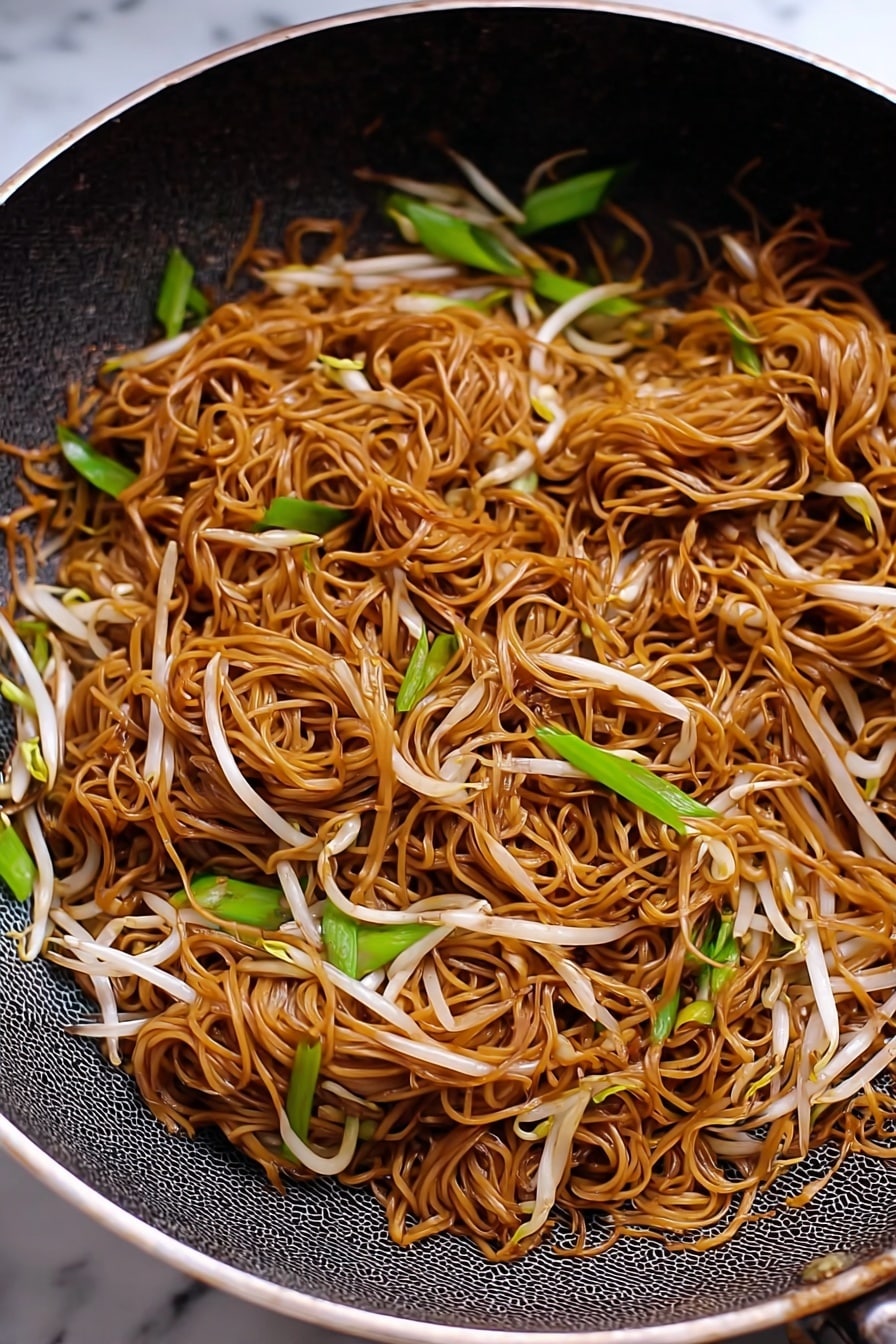
If you’ve ever craved that perfect balance of crispy, saucy, and savory noodles straight from a Chinatown kitchen, you’re going to adore this Cantonese Chow Mein Recipe. I absolutely love how this dish comes together quickly yet delivers such an authentic flavor punch that always impresses. Whether you’re making a weeknight dinner or treating friends to something special, this recipe is my go-to for an easy, restaurant-quality meal right in your own kitchen.
Why You’ll Love This Recipe
- Authentic Crispy Noodles: The thin Hong Kong-style egg noodles get perfectly crisped for that satisfying texture contrast you want in chow mein.
- Flavorful Sauce Blend: A mix of dark soy, oyster, and fish sauce creates a savory umami kick that you won’t find in every homemade chow mein.
- Quick & Easy: Ready in about 15 minutes, this dish is as fast as it is delicious—perfect for busy nights or last-minute guests.
- Fresh Veggies & Vibrant Color: Bean sprouts and green onion add freshness and crunch that balance the richness of the noodles.

Ingredients You’ll Need
This Cantonese Chow Mein Recipe uses simple, fresh ingredients that come together beautifully. I always suggest grabbing fresh Hong-Kong style egg noodles if you can—freshness really makes a difference in the texture.

- Chow Mein Egg Noodles: Thin and fresh Hong-Kong style noodles are best for that authentic texture and quick cooking.
- Yellow Onion: Thinly sliced for a mild sweetness that caramelizes gently in the pan.
- Green Onions: You’ll need both white and green parts; they bring layers of flavor and freshness.
- Bean Sprouts: Adds a crisp, fresh crunch that balances the noodles.
- Corn Oil: Neutral oil for high heat sautéing; keeps flavors clean and lets noodles crisp.
- Sesame Oil: A little finish drizzle for that toasty aroma and depth.
- Dark Soy Sauce: For rich color and deep umami.
- Regular Soy Sauce: Balances saltiness without overpowering.
- Oyster Sauce: Brings a savory sweetness unique to Cantonese dishes.
- Fish Sauce: Just a touch enhances the overall savory flavor.
- Granulated Sugar: Balances the salt and adds subtle sweetness.
- Water: Helps balance the sauce consistency for easy coating.
Variations
I’ve found that this Cantonese Chow Mein Recipe is wonderfully versatile, so don’t hesitate to customize it based on what you have in the fridge or your taste preferences. It’s a recipe that really welcomes personal touches!
- Vegetarian Version: I sometimes swap oyster sauce for a mushroom sauce or hoisin, and skip the fish sauce—still delicious and satisfying.
- Protein Add-ins: Adding shrimp, chicken, or thinly sliced beef can turn this into a heartier meal—just season and stir-fry your protein first.
- Spicy Kick: A dash of chili oil or fresh sliced chili peppers gives a nice heat if you love a little spice.
- Extra Veggies: Red bell peppers, snap peas, or baby corn add color and crunch, great when in season or on hand.
How to Make Cantonese Chow Mein Recipe
Step 1: Perfectly Soften Your Noodles
Start by pouring boiling water over your chow mein noodles and let them soak for just 30 seconds to about a minute until soft but not mushy. This step is crucial—I’ve learned that over-soaking makes them limp, while under-soaking leaves them tough. Drain well and set aside. Getting the noodle texture just right upfront makes all the difference!
Step 2: Mix Your Savory Stir Fry Sauce
In a small bowl, whisk together the dark soy sauce, regular soy sauce, oyster sauce, fish sauce, granulated sugar, and water until the sugar dissolves. This combo packs in layers of flavor that give this dish its authentic Cantonese character. I like to taste the sauce here and adjust the sweetness or saltiness to suit my palate. Feel free to tweak it for your own perfect balance.
Step 3: Sauté Your Aromatics to Fragrant Perfection
Heat a tablespoon of corn oil in your wok or large pan over medium-high until it’s shimmering. Toss in the sliced onions and the white parts of the green onions, sautéing for about a minute until they soften and release their flavor. Then remove and set aside. This step builds a foundational aroma that carries through the whole dish—it’s a little trick I picked up that elevates the final flavor tremendously.
Step 4: Crisp Up Those Noodles
Now for the fun part! Heat another tablespoon of oil in the wok over medium-high heat until really hot—about 2 minutes. Spread your drained noodles out in a thin layer, then let them sit undisturbed so they crisp up nicely for about 2 minutes. Flip carefully, add another tablespoon of oil around the pan’s edges, and let the other side crisp for 2 more minutes. The slight crunch paired with tender noodles inside is what makes this Cantonese Chow Mein Recipe so memorable for me.
Step 5: Toss It All Together
Add back your sautéed onions and white and green parts of the green onions, toss in the bean sprouts, and pour in the stir fry sauce. Gently mix everything to combine well but don’t over-stir, or you’ll break the noodles. Cook for another minute or two until veggies are just warmed through and the sauce lightly coats the noodles. Taste and tweak seasoning—sometimes a splash of soy or a pinch of sugar makes all the difference.
Step 6: Final Touch—Sesame Oil
Remove from heat and drizzle the teaspoon of sesame oil over the chow mein, tossing gently to mix. That nutty aroma right at the end is one of my favorite parts—it adds depth and a luxurious finish you won’t want to skip. Serve immediately while it’s hot and enjoy every crisp and saucy bite!
Pro Tips for Making Cantonese Chow Mein Recipe
- Noodle Soaking Time: Don’t over-soak your noodles; they should soften but still hold a bit of bite so they crisp nicely in the pan.
- Heat Is Your Friend: Use medium-high heat and enough oil to get a nice crisp without burning the noodles—patience here pays off.
- Sauce Balance: Taste your sauce before adding—adjust sweetness or saltiness to your liking for a perfectly balanced dish.
- Gentle Tossing: When combining noodles and veggies with sauce, mix gently to avoid breaking the noodles apart.
How to Serve Cantonese Chow Mein Recipe

Garnishes
I love topping this chow mein with an extra sprinkle of thinly sliced green onions and sometimes a few toasted sesame seeds for texture and visual appeal. A squeeze of fresh lime juice can add a little bright zing if you’re feeling adventurous, but it’s delicious without any extras too.
Side Dishes
Pair this Cantonese Chow Mein Recipe with simple sides like steamed or stir-fried bok choy, Chinese broccoli, or a light cucumber salad. For more protein, some steamed dumplings or crispy spring rolls work beautifully alongside.
Creative Ways to Present
For special occasions, I like serving portions of chow mein in small bowls topped with a soft-boiled egg or toasted chopped peanuts for extra richness and texture. Arranging the noodles neatly with a garnish of cilantro and a drizzle of chili oil makes it feel extra festive and restaurant-worthy.
Make Ahead and Storage
Storing Leftovers
If you have leftovers, I recommend storing them in an airtight container in the fridge. The noodles will soften over time but still taste great reheated within 1-2 days. I always separate any additional sauce on the side if possible to keep the noodles from getting soggy.
Freezing
Freezing isn’t my favorite for this recipe because the noodle texture suffers; however, if you must, freeze in a shallow container and consume within a month. Thaw gently overnight in the fridge before reheating to preserve as much texture as possible.
Reheating
The best way I’ve found to reheat Cantonese Chow Mein is in a hot skillet or wok with a splash of oil over medium heat. Toss gently until heated through and the noodles regain a bit of crispness. Microwaving works but can make the noodles mushy, so use that as a last resort.
FAQs
-
Can I use dried noodles instead of fresh chow mein noodles?
You can, but fresh Hong-Kong style egg noodles give the best texture for this recipe. If using dried noodles, cook them according to package instructions first, drain well, and then follow the steps to crisp them in the pan. The final texture might be a bit different but still tasty.
-
Is this Cantonese Chow Mein Recipe gluten-free?
Traditional chow mein noodles and soy sauces contain gluten, so this recipe isn’t gluten-free as is. To make it gluten-free, look for gluten-free noodles and tamari or gluten-free soy sauces. Oyster sauce can sometimes contain gluten, so check labels or substitute with alternatives like mushroom sauce.
-
How do I get my noodles crispy without burning them?
Heat your pan and oil well before adding noodles, then spread them thinly and let them cook undisturbed to form a crust. Flip carefully using a spatula and add a bit more oil around the pan edges. Medium-high heat is perfect—too high and they burn, too low and they won’t crisp properly.
-
Can I make this recipe vegan?
Absolutely! Swap oyster sauce for a mushroom or hoisin sauce and omit fish sauce. Use vegetable-based sauces and ensure no animal-derived ingredients in your noodles. The stir-fried veggies and sauce still bring plenty of flavor so your vegan Cantonese Chow Mein will be equally delicious.
Final Thoughts
This Cantonese Chow Mein Recipe holds a special place in my kitchen because it combines simplicity with that unmistakable restaurant-worthy crunch and flavor. Every time I make it, my family goes crazy for it—or when I’ve shared it with friends, it always disappears fast! I can’t recommend it enough if you want to master a classic dish that’s quick, tasty, and adaptable. Give it a go, and I’m confident you’ll keep coming back to this recipe again and again.
Print
Cantonese Chow Mein Recipe
- Prep Time: 5 minutes
- Cook Time: 10 minutes
- Total Time: 15 minutes
- Yield: 2 servings 1x
- Category: Main Dish
- Method: Frying
- Cuisine: Cantonese
Description
Cantonese Chow Mein is a classic stir-fried noodle dish featuring crispy egg noodles, sautéed aromatics, fresh bean sprouts, and a savory soy-based sauce. This recipe combines simple ingredients with quick pan-frying to create a delicious and satisfying meal perfect for a quick lunch or dinner.
Ingredients
Noodles and Vegetables
- 12 oz chow mein egg noodles, thin fresh noodles, Hong-Kong style
- ½ small yellow onion, thinly sliced
- 5 stalks green onions, cut into 2-inch pieces, whites and greens divided
- 2 cups bean sprouts
Oils
- 3 tablespoons corn oil or any neutral oil
- 1 teaspoon sesame oil (to finish)
Stir Fry Sauce
- 2 tablespoons dark soy sauce
- 1 tablespoon regular soy sauce
- 1 tablespoon oyster sauce
- ½ teaspoon fish sauce
- 1 tablespoon granulated sugar
- 1 tablespoon water
Instructions
- Cook the noodles: Pour boiling water over the chow mein egg noodles and soak them for 30 seconds to 1 minute until softened. Drain and set aside.
- Make the sauce: In a small mixing bowl, combine dark soy sauce, regular soy sauce, oyster sauce, fish sauce, granulated sugar, and water. Stir until the sugar has fully dissolved.
- Sauté aromatics: Heat 1 tablespoon of corn oil in a wok over medium-high heat until hot. Add the yellow onion and the white parts of the green onions, then sauté for 1 minute until fragrant. Remove from heat and set aside.
- Pan-fry the noodles: Heat another tablespoon of corn oil in the wok over medium-high heat until hot, about 2 minutes. Add the softened noodles and spread them into a thin layer to allow them to crisp, cooking for about 2 minutes. Flip the noodles, drizzle 1 tablespoon of corn oil around the perimeter, and cook for an additional 2 minutes until crispy and golden.
- Add vegetables and sauce: Return the sautéed onions to the wok, add the green parts of the green onions, bean sprouts, and the prepared stir-fry sauce. Gently mix everything together and cook for 1-2 minutes to combine flavors. Taste and adjust the seasoning as needed.
- Serve: Remove the chow mein from heat, drizzle with sesame oil, toss gently to combine, and serve immediately while hot and crispy.
Notes
- Use fresh Hong-Kong style chow mein noodles for the authentic texture and flavor.
- Soaking noodles briefly in boiling water softens them without overcooking, essential for achieving the crispy finish.
- Be careful not to burn the garlic or onions during sautéing; quick cooking on medium-high heat preserves their flavor.
- Crisping the noodles in the pan is crucial for the classic chow mein texture—avoid overcrowding the wok for best results.
- Adjust the soy sauce and sugar levels in the sauce to taste, depending on preferred saltiness and sweetness.
Nutrition
- Serving Size: 1 serving (about 1/2 recipe)
- Calories: 420 kcal
- Sugar: 6 g
- Sodium: 950 mg
- Fat: 16 g
- Saturated Fat: 2.5 g
- Unsaturated Fat: 12 g
- Trans Fat: 0 g
- Carbohydrates: 58 g
- Fiber: 3 g
- Protein: 12 g
- Cholesterol: 0 mg


Your email address will not be published. Required fields are marked *