
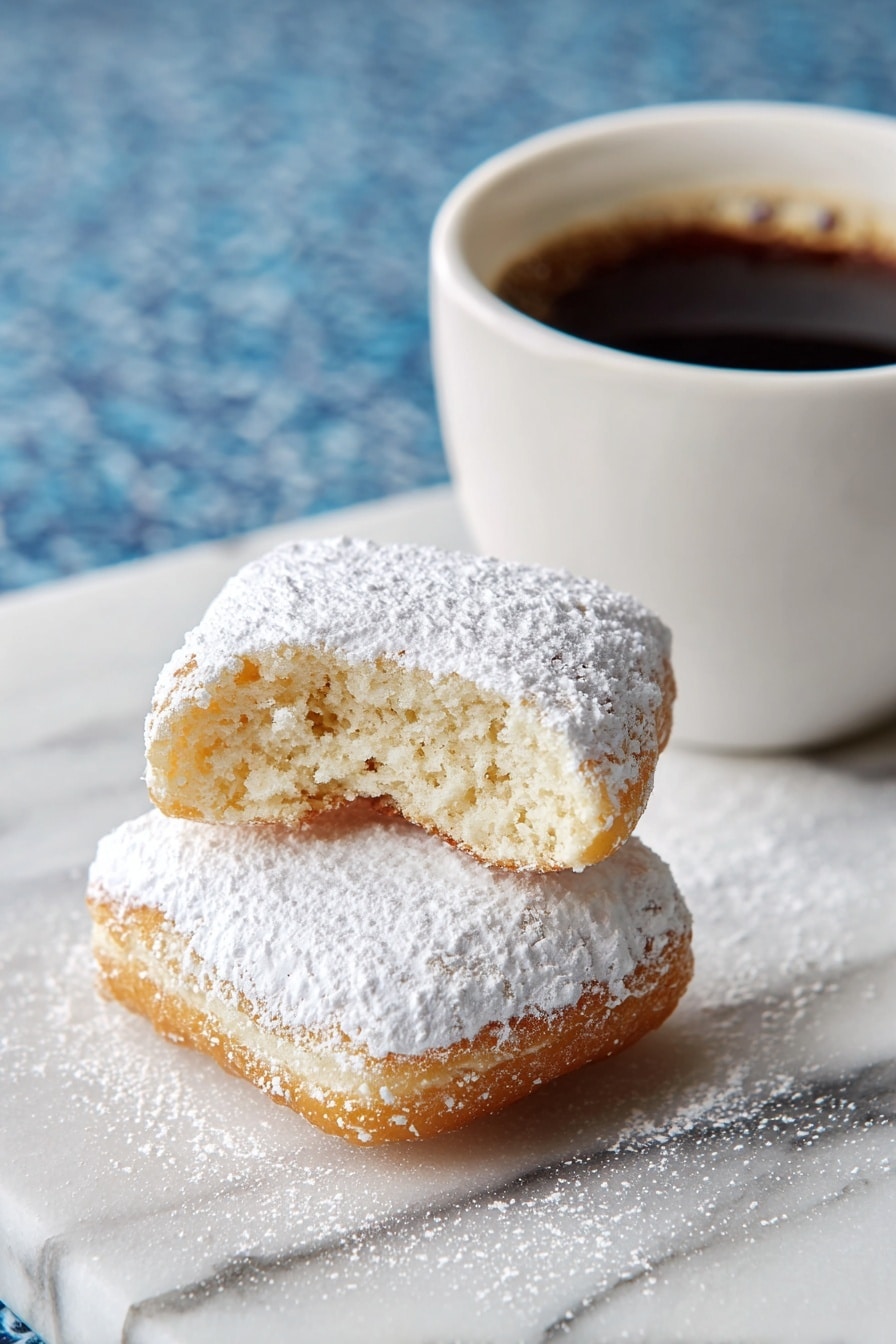
If you’ve ever wanted the joy of those pillowy, sweet French doughnuts without the mess of frying, you’re going to love this Baked Beignets Recipe. I absolutely love how this recipe gives you that classic beignet goodness with a crispy outside and airy inside, but baked instead of deep-fried. When I first tried switching to baking, I was amazed at how easy and foolproof it was—plus, your kitchen smells amazing the whole time. Trust me, once you taste one fresh from the oven, you’ll be hooked just like my family is.
Why You’ll Love This Recipe
- Healthier Alternative: Baked instead of fried means less oil and less guilt, but all the flavor and texture you crave.
- Simple Ingredients: Uses pantry staples you probably already have on hand — no fancy stuff needed.
- Beginner Friendly: This recipe walks you through proofing and dough handling in a way that’s easy to grasp.
- Perfect for Any Occasion: Whether it’s brunch, dessert, or a snack, these beignets impress every time.

Ingredients You’ll Need
Getting the dough just right means using the right combination of wet and dry ingredients. I find that using bread flour gives a wonderful chew and structure, and the evaporated milk adds a subtle richness that makes these baked beignets extra special.

- Water: Lukewarm water activates the yeast nicely—too hot will kill it, so test it first with your wrist.
- Sugar: Just enough to feed the yeast and add a touch of sweetness without overpowering.
- Active dry yeast: The magic behind the rise and fluffiness; make sure it’s fresh for best results.
- Egg: Adds richness and helps bind the dough for that tender texture.
- Vanilla extract: A little warmth & aroma that transforms the whole batch.
- Salt: Enhances all the flavors—don’t skip it even if you’re doubling the recipe.
- Evaporated milk: Gives the dough a slight sweetness and moisture, making it taste decadent.
- Butter (melted): Adds delicious buttery flavor and keeps the dough tender.
- Bread flour: Higher protein content means chewy yet soft dough perfect for beignets.
- Egg wash: For brushing the tops to get a light golden color when baked.
- Butter (for brushing after baking): This extra step creates richness and helps the powdered sugar stick.
- Powdered sugar: The signature finish of a beignet—you’ll want to dust generously!
Variations
I love mixing things up with this baked beignets recipe depending on the season or what I have in the pantry. Feel free to play around and make this your own—you won’t break the beignet magic, I promise!
- Gluten-Free Version: I swapped bread flour for a 1-to-1 gluten-free blend once — the texture’s a bit different but still totally tasty.
- Cinnamon Sugar: After baking, toss your beignets in a cinnamon-sugar mix instead of just powdered sugar for a warm twist.
- Stuffed Beignets: I tried adding a dollop of jam or Nutella in the center before baking — just be sure to seal the edges well.
- Reduced Sugar: My family likes them a bit less sweet sometimes—just use less sugar in the dough and go light on the dusting.
How to Make Baked Beignets Recipe
Step 1: Wake up the yeast and mix your wet ingredients
Start by mixing lukewarm water, sugar, and yeast in a large bowl. Set it aside for about 5 to 10 minutes until it’s nice and foamy on top—that’s how you know your yeast is active and ready to make magic. Meanwhile, whisk together your egg, salt, vanilla, and evaporated milk in a separate bowl.
Step 2: Combine and form the dough
Pour your egg mixture into the yeast mixture, and whisk to combine. Then add the melted butter. Gradually mix in your bread flour—I usually start with a spatula and finish with my hand because feeling the dough tells me so much. It’ll be slightly sticky, which is totally normal. Lightly oil your bowl and coat the dough so it doesn’t dry out.
Step 3: First proofing—let the dough rise
Cover your dough with plastic wrap and a towel and let it sit at room temperature for about 2 hours, until doubled in size. I love this part—watching the dough puff up is so satisfying. If you’re not ready to bake right away, you can refrigerate it overnight and bake the next day, which also makes the flavors develop nicely.
Step 4: Shape and second proof
Roll the dough out to about a quarter-inch thickness on a floured surface, then cut into 1½-inch squares with a pizza cutter for quick clean cuts. Place them spaced about an inch apart on a parchment-lined sheet tray. Loosely cover and let proof again for 45 minutes at room temperature while you preheat your oven to 350°F (180°C).
Step 5: Bake and finish with buttery sweetness
Brush each square lightly with egg wash for that golden glow, then bake for 12-15 minutes until the tops are beautifully golden. Once out of the oven, brush each beignet with melted butter while warm and dust generously with powdered sugar. Here’s the trick I learned: the butter not only adds flavor but helps the sugar stick perfectly, giving you that authentic beignet experience.
Pro Tips for Making Baked Beignets Recipe
- Feel the Dough: I always use my hands during mixing and shaping to sense stickiness and elasticity—it’s the best way to know if you’ve got it right.
- Keep Proofing Warm: Your dough will rise faster and fluffier if it’s in a warm spot—near a sunny window or on top of the fridge works perfectly.
- Don’t Overbake: Beignets can go from golden to dry quickly; peel one open to check for softness in the center if you’re unsure.
- Brush Butter Warm: Always brush melted butter on the beignets when they’re hot—this makes the powdered sugar stick and keeps them moist and flavorful.
How to Serve Baked Beignets Recipe

Garnishes
I’m a classic powdered sugar purist, but sometimes I add a sprinkle of cinnamon or even a drizzle of chocolate sauce for a fun twist. For a brunch party, fresh berries on the side also add a nice balance of tartness.
Side Dishes
My favorite pairing for baked beignets is a strong cup of coffee or café au lait to cut through the sweetness. If you’re serving breakfast or brunch, a side of fresh fruit salad or scrambled eggs keeps the meal balanced and satisfying.
Creative Ways to Present
When hosting, I like to pile the warm beignets in a pretty basket lined with a cloth napkin, dust them with powdered sugar at the table, and serve with small bowls of jams, honey, or whipped cream. It makes a simple treat feel extra special and interactive.
Make Ahead and Storage
Storing Leftovers
If you have any leftover beignets (which is rare in my house!), store them in an airtight container at room temperature for up to two days. I find they lose their crispness pretty quickly, so it’s best to enjoy fresh whenever possible.
Freezing
You can freeze baked beignets by laying them out in a single layer on parchment-lined trays, freezing until firm, then transferring them to a freezer bag. I’ve had good luck freezing for up to a month. Just thaw at room temp or warm gently when ready.
Reheating
To bring back that fresh-baked feeling, reheat beignets in a 350°F oven for 5–7 minutes until warmed through and slightly crisp again. Microwaving makes them chewy and less enjoyable, so I skip that method altogether.
FAQs
-
Can I use all-purpose flour instead of bread flour?
You can, but the texture will be a bit softer and less chewy. Bread flour’s higher gluten content is ideal for that signature airy, chewy beignet texture, but all-purpose flour still works in a pinch.
-
Is it necessary to proof the dough twice?
Yes, two rounds of proofing help develop flavor and give you that light, airy beignet. The first rise lets the dough ferment, and the second lets the shaped pieces puff up before baking.
-
Why bake instead of fry beignets?
Baking is cleaner, less oily, and easier for most home cooks. While frying offers a classic crunch, baking yields a crisp exterior with airy interior without the extra fat and hassle.
-
How long do baked beignets keep fresh?
They’re best eaten the day they’re baked, but if stored airtight at room temperature, they can last up to two days though they’ll lose some crispness.
-
Can I add fillings or toppings to these baked beignets?
Absolutely! You can stuff beignets with jam or Nutella before baking or top them with cinnamon sugar. Just be sure to seal edges well to avoid leaks during baking.
Final Thoughts
This Baked Beignets Recipe is a warm, cozy treat that’s become a staple on my weekend menu. It feels like a little love letter to classic New Orleans flavors—light, fluffy, and just sweet enough. I can’t recommend it enough if you want that beignet magic without the deep-frying mess. Make a batch, call over a friend or family member, and enjoy these warm, buttery squares dusted with powdered sugar. Seriously, nothing beats biting into one fresh from the oven. Give it a try—you’ll be so glad you did!
Print
Baked Beignets Recipe
- Prep Time: 20 mins
- Cook Time: 15 mins
- Total Time: 3 hrs 20 mins
- Yield: 8 servings 1x
- Category: Dessert
- Method: Baking
- Cuisine: French
Description
These Baked Easy Beignets are light, airy, and irresistibly delicious French-style doughnuts made from a simple yeast dough baked to golden perfection. Unlike traditional fried beignets, these are baked for a healthier twist without sacrificing the classic chewy and fluffy texture. Finished with a buttery glaze and a generous dusting of powdered sugar, they make an elegant and satisfying treat perfect for breakfast, brunch, or dessert.
Ingredients
Wet Ingredients
- ¾ cups (6 fl oz/170 ml) lukewarm water
- 1 large egg, at room temperature
- 2 teaspoons vanilla extract
- ½ cup (4 fl oz/120 ml) evaporated milk
- 2 tablespoons (1 oz/28 g) butter, melted
- 3 tablespoons (1 ½ oz/45 g) butter, melted (for brushing)
Dry Ingredients
- ⅓ cup (2 ½ oz/75 g) granulated sugar
- 1 teaspoon active dry yeast
- 1 teaspoon salt
- 3 ½ cups (1 lb 2 oz/525 g) bread flour
- Powdered sugar for dusting
Other
- Egg wash (1 egg beaten with splash of water or milk for brushing)
- Oil for coating the bowl
Instructions
- Activate the yeast: In a large bowl, combine lukewarm water, granulated sugar, and active dry yeast. Stir gently and let it sit for 5-10 minutes until the mixture becomes foamy, indicating the yeast is active.
- Mix the wet ingredients: In a small bowl, whisk together the large egg, salt, vanilla extract, and evaporated milk until well combined.
- Combine wet mixtures: Add the egg mixture to the foaming yeast mixture and whisk thoroughly to combine.
- Add butter and flour: Stir in the melted butter first, then gradually add the bread flour. Use a spatula or your hand to bring the dough together into a sticky ball. The dough will feel slightly sticky—that’s normal and desired.
- First proof: Lightly drizzle oil in the bowl and coat the dough and sides to prevent sticking. Cover the bowl with plastic wrap and a kitchen towel. Let the dough proof at room temperature for about 2 hours or until it doubles in size. If not baking immediately, refrigerate overnight after proofing.
- Prepare for baking: Line a baking tray with parchment paper and set aside.
- Shape the beignets: Punch down the risen dough gently, roll it out on a lightly floured surface to a thickness of ¼ inch. Using a pizza cutter, cut the dough into 1 ½-inch squares and arrange them on the prepared baking tray, spacing them about 1 inch apart.
- Second proof: Cover the dough squares loosely with cling wrap and a kitchen towel. Let them rise for about 45 minutes at room temperature to become puffy.
- Preheat oven and egg wash: Toward the end of the second proof, preheat the oven to 350℉ (180℃). Lightly brush each dough square with the prepared egg wash to give a glossy finish after baking.
- Bake: Bake the beignets for 12-15 minutes or until they turn golden brown and puffed up.
- Finish with butter and sugar: Remove the beignets from the oven and while still warm, brush generously with melted butter. Immediately dust with powdered sugar to coat thoroughly.
- Serve: Enjoy the beignets fresh and warm for the best texture and flavor.
Notes
- Use bread flour for a chewy and airy texture due to its higher gluten content.
- Ensure the dough doubles in size during proofing for fluffy beignets; do not rush this step.
- Using a stand mixer with a dough hook can simplify the mixing and kneading process.
- Brushing with melted butter after baking enhances flavor and helps powdered sugar stick better.
- Generously dust with powdered sugar to achieve the classic sweet coating associated with beignets.
- Serve immediately out of the oven for the best combination of crispy exterior and soft interior.
- Store leftovers in an airtight container and reheat briefly to regain softness, though best eaten fresh.
Nutrition
- Serving Size: 1 serving (about 2 beignets)
- Calories: 280
- Sugar: 11g
- Sodium: 230mg
- Fat: 9g
- Saturated Fat: 4.5g
- Unsaturated Fat: 3g
- Trans Fat: 0g
- Carbohydrates: 41g
- Fiber: 1.5g
- Protein: 6g
- Cholesterol: 55mg


Your email address will not be published. Required fields are marked *